WAP26 ENTANGLEMENT & PROXIMITY
August 5-13th 2026, Stockholm and the archipelago.
Entanglement and Proximity can be approached from many perspectives. As a participant you find yours and share with the group. Below you see the two curators approach.
The WAP26 program turns nomadic as we walk the Stockholm Archipelago in the imaginary footsteps of Peter Weiss, in tandem with Gloria Anzaldúa, Bing Song, Paola Bacchetta and Karen Barad. WAP26 frames walking towards political aesthetics, incorporating approaches of entanglement, proximity and becoming.
Walking as Social Imagination as a way of being with the landscape, nature and each others practices. It incorporates approaches of entanglement and co-becomings. Walking becomes method, medium, and statement – a practice of presence that resists mastery, ownership, and spectacle. From a new materialist lens, walking is a practice of engagement. It connects body, place, and others in ways that are ethical, relational, and transformative, challenging conventional ideas of control, productivity, and visual consumption.
Dissemination of the program will be held as a public event in Stockholm with exhibition of wip, walks and talks.
Walking Area: Stockholm Archipelago (South and Mid) , we start and end in central Stockholm, Sweden
Selection: Open Call 4-9 and 3 WAPC members with one invitation each. Selected artists are published below.
Funding/cost: no fee, you are responsible for your own costs.
Curated/organized by: Anna Viola Hallberg (Se) and Janice Jensen (De)
Selection Committee: Curators + WAPC artist Jūratė Girdvainienė (Lt) who will also join WAP26.
More in below categories
The Program
The ferries stop running by August 16th. In Sweden schools start in the following week, so with this the archipelago will be less crowded but services still open.
The selected timeframe is also usually good weather. You should monitor this yourself but in general August in the Stockholm archipelago can expect mild, late-summer weather with average daily highs of 68°F to 78°F (20°C to 26°C) and cool overnight lows ranging from 48°F to 62°F (9°C to 17°C).
Information session for selected artists will take place in the week post July 27. We assist in finding your tent and cooking pal during the session. This way you dont have to carry as much. We will also share our own list “what to bring” and “what to think of” safety issues etc.
There will be storage opportunity for you in Stockholm.
You are responsible for your own costs ie public transportation (metro/bus/boat), possibly some campground fees, food, and your select accommodation during your stay in Stockholm. On all islands you can have indoor accommodation like hostel, cabin or bed and breakfast.
30 day card for boats in the archipelago is less than 60 euro. To this you need to add potential bus/metro transits you do in central Stockholm.
Schedule: Aug 5-14
AUG 5, Arrival to Stockholm: You need to arrive no later than the day before the first walk day. If earlier we can do some Stockholm walks together.
AUG 5, Meet and greet in Stockholm in late early evening. We do this as a share session where everyone makes a micro presentation of their work.
AUG 6, Departing from Stockholm 8:06 am for Landsort
Landsort 6-8
Nåttarö 8-9
Sandhamn 9
Ingemarsö and Finnhamn 9-11 (possible to take late ferry back on the 10th)
AUG 12 , Workday in Stockholm at Slakthusateljéerna, process experiences and prep your work for public sharing , installing etc (Full moon eclipse)
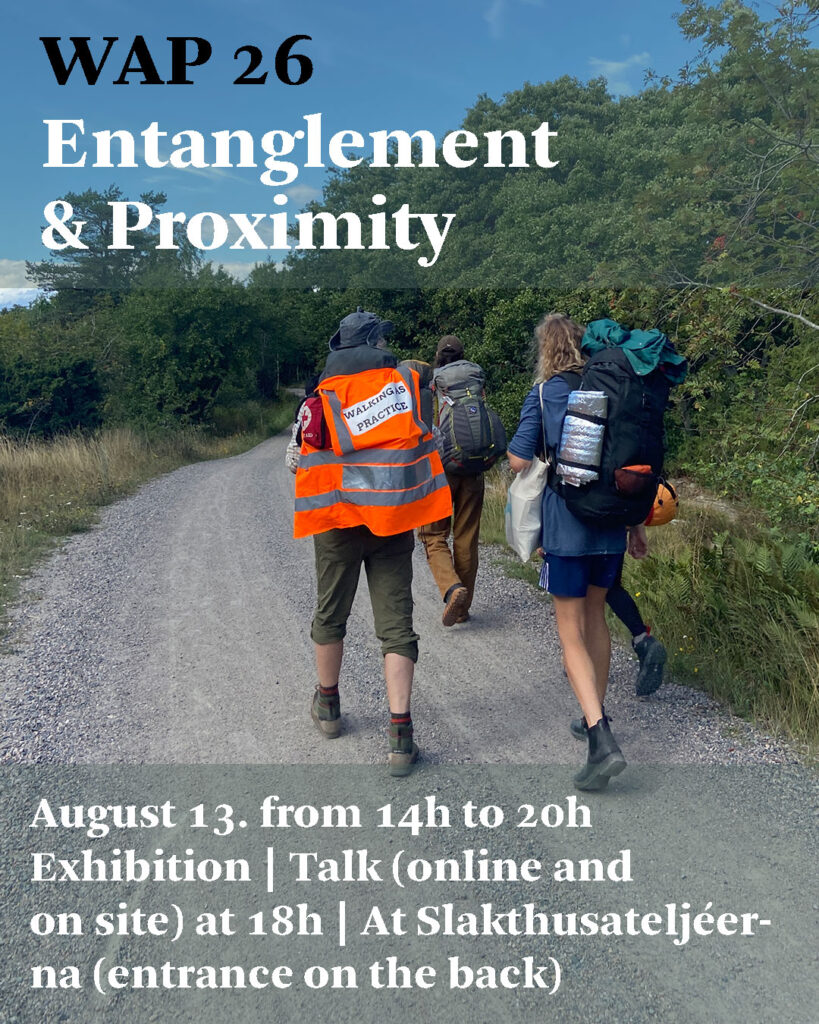
AUG 13, Public Dissemination of project at Slakthusateljéerna, drawings, video, performance, sound, walks etc. This day we are also doning a live video presentation with Walking Arts and Local Communities/WALC a café style session led by Andrew Stuck.
AUG 14, Tentative walk and Departure
Also see page Public, for more details on public walk and presentations 28 >>>
WAP Cohort will stewart WAP26 in the archipelago. The program is curated by Anna Viola Hallberg and Janice Jensen.
Additional ongoings in Stockholm
Summer Cinema, Aug 12–16 Rålis >>>
Stockholm Culture Festival, Aug 13-17 >>>
Curatorial framework
WAP26 – Entanglement and Proximity
Walking is approached as a curatorial and artistic methodology of situated attention: an embodied mode of engaging with territory, history, and power under conditions of ecological and geopolitical uncertainty towards social imagination. WAP26 frames walking as a critical, relational practice through which knowledge emerges in movement, encounter, and exchange. Participation is grounded in contribution, with collective engagement unfolding through the shared acts of walking, talking, and traversing landscapes together.
Within this framework, walking functions simultaneously as method, medium, and statement. It privileges presence, attentiveness, and relationality over representation, mastery, ownership, or spectacle. Drawing on new materialist perspectives, walking is understood as a practice of engagement in which bodies, environments, histories, and material forces are co-constitutive. Participants engage with walks informed by scores, prompts, and other points of departure, foregrounding entanglement and proximity as both methodological principles and lived conditions.
The program brings together parts of WAPC collective while opening two to four positions through an open call, creating encounters between established collaborators and artists previously unknown to the project. Participants spend five nights camping throughout the archipelago and four to five nights based in Stockholm, allowing the project to oscillate between temporary settlement and continual movement. This rhythm of mobility and pause becomes integral to the artistic process itself.
Together in physical space, we explore what it means to be a walking artist, affirming walking not as exercise but as an aesthetic, political act and social choreography.
The two curators work together and represent their own positioning and knowledges. Where Jensen is originally based in drawing and Hallberg lens- and embodied practices they move towards social imagination.
Jensen
Walking across the islands of the Stockholm Archipelago, staying at different destinations each night, is proposing the simple freedom of not belonging somewhere, exploring with excitement and being present in the moment. When passing through different surroundings, encountering the unknown, sensing places and enjoying to walk further, the consciousness becomes more open and less restrained, creating a feeling of entanglement and proximity with nature and the ones that walk with. The nomadic mode of the program is creating a special residency setting since we will share each others company most of the time, while also moving from one place to another. We will explore collectively what walking together as a group means to us, even though each artist can still formulate their own artistic approach with the medium of their choice. Through sharing work and ideas, we co-create and exchange. The action of walking as an artist is focusing on the joy of being excited and inspired by the world around us without the necessity to produce any outcome, but rather to value the process and the beauty of transience.
My walking practice is strongly connected to drawing, since I have built my own tool, the drawing machine, in order to draw while walking. The tool consists of a wooden board, a roll on the top and the bottom, and a long paper scroll that can be rolled over the board where I draw. With this method, drawing becomes a gesture, an intuitive tool to describe my perception of surroundings and a way to reflect on them in an intuitive and spontaneous way. It is a rhythmic, performative action, which demands concentration to combine drawing, scrolling the paper, walking and looking at the same time. My approach is to depict the moment of walking by, to see myself as a walker in a surrounding which is also moving, and create a drawing from that overlap.
Hallberg
After three years during which participating artists maintained a shared studio on Björkö in the northern Stockholm archipelago, WAP26 marks a deliberate methodological shift. Moving away from fixed geographic anchoring, the project adopts a nomadic mode of artistic and curatorial practice, positioning transience not simply as a condition of movement but as both an epistemic methodology and a political proposition. Rather than working from a single site, participants traverse the Stockholm archipelago through a series of walks, each conceived and led by an artist whose practice shapes the encounter with landscape, history, and place.
Walking constitutes the project’s primary artistic and curatorial methodology. It is understood as an embodied practice of situated attention through which knowledge emerges relationally—in movement, encounter, interruption, and exchange. Under conditions of ecological instability and geopolitical uncertainty, walking becomes a critical mode of inquiry that privileges presence, attentiveness, and reciprocity over representation, mastery, ownership, or spectacle. Participation is grounded in contribution rather than production, with the collective process unfolding through shared acts of walking, conversation, listening, and inhabiting landscapes together.
Within this framework, walking operates simultaneously as method, medium, and political statement. Informed by new materialist thought, it is understood as a practice in which bodies, environments, histories, infrastructures, and material forces are mutually constitutive. Participants engage with artist-developed scores, prompts, and site-responsive propositions that foreground entanglement, contingency, and proximity as both methodological principles and lived conditions.
The 2026 programme unfolds nomadically across the Stockholm archipelago, walking in the imagined footsteps of Peter Weiss while engaging the theoretical and political trajectories of Gloria Anzaldúa, Bing Song, Paola Bacchetta, and Karen Barad. Across these distinct practices, movement is approached as a relational mode of thinking that unsettles fixed identities, territorial logics, and linear histories, opening possibilities for ethical engagement with place and with others. Rather than functioning as direct references, these figures provide conceptual orientations through which walking becomes a means of negotiating fragmented belonging, historical responsibility, privilege, displacement, and embodied experience.
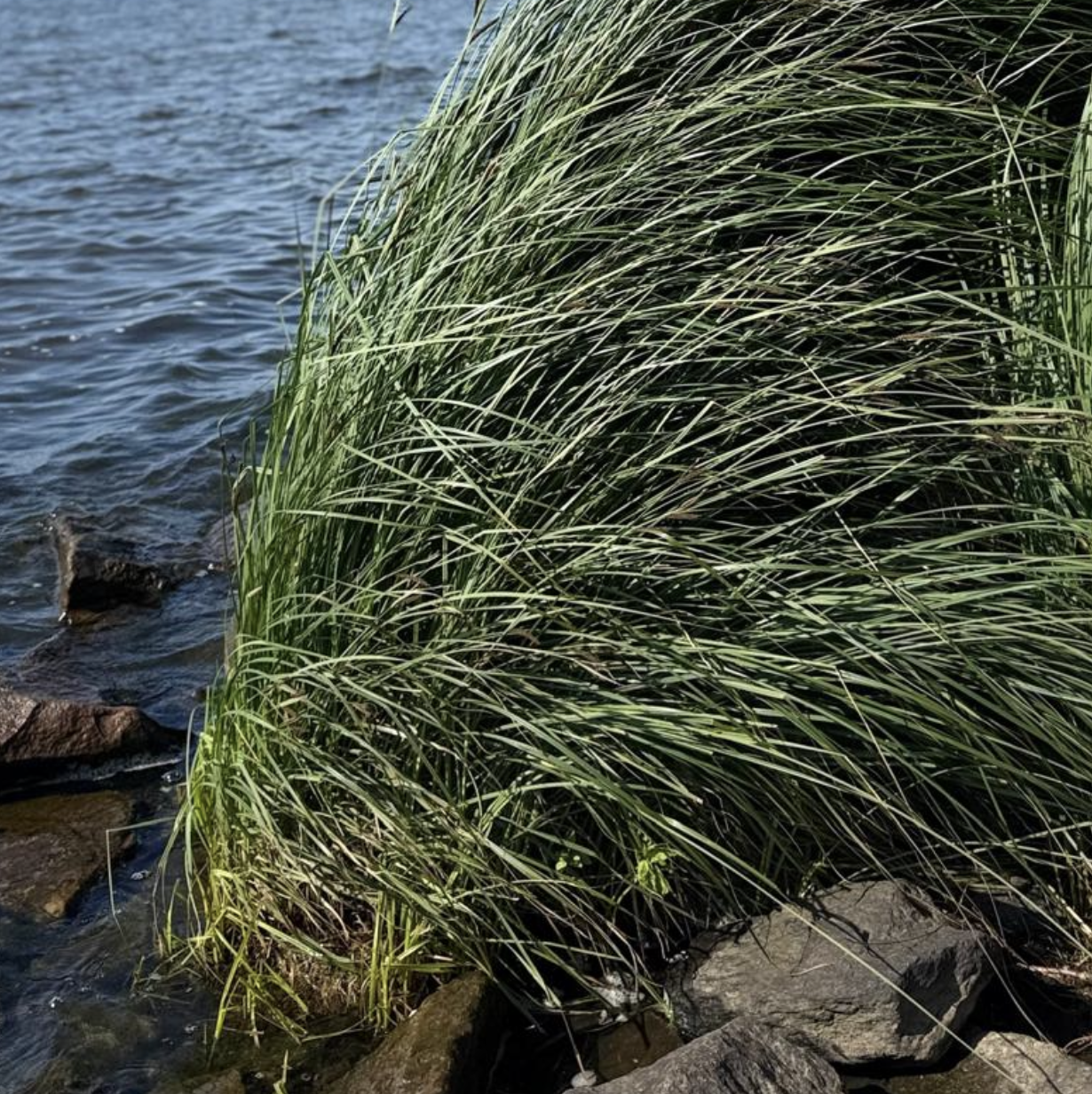
Proximity is understood not merely as spatial nearness but as an ethical and political relation through which bodies encounter landscape, history, environmental precarity, and one another. Knowledge does not accumulate linearly but emerges through interruptions, shifting relations, and partial perspectives. In the blue spaces of the Stockholm archipelago, water becomes an active collaborator rather than a backdrop. Its mutable rhythms, porous boundaries, and continuous transformations mirror and activate the project’s commitment to transience, dissolving distinctions between permanence and impermanence, stability and movement.
Transience therefore functions as the central artistic principle of WAP26. It is not simply movement through space but a methodology for engaging uncertainty, incompleteness, and instability as productive conditions of artistic inquiry. By relinquishing permanent territorial anchoring, the project challenges assumptions of ownership, permanence, and control, proposing instead forms of practice grounded in mutual dependency, vulnerability, and situated relation.
WAP26 ultimately proposes walking as a critical artistic practice through which collective knowledge is generated not despite uncertainty but through it. In embracing movement, impermanence, and contingency, the project cultivates forms of artistic research that remain embodied, relational, and continually in flux.
In a process of co-becoming we unpack Entanglement and Proximity towards social imagination in relation to the surrounding nature and the chaotic state of the world. I will share my perspective of being an artist with a lens- and embodied practice you share your perspectives.
See links for more on Peter Weiss
Links/reading
Archipelago
Allemansrätten/The Right of Public Access >>>
Stockholm Archipelago Trail >>>
Explore Stockholm Archipelago >>>
Ferry Transit Map >>>
Archipelago Forecast >>>
WAP23-25 Research Catalogue >>>
Baltic Sea Health Index (Stockholm University) >>>
Ocean Literacy (UNESCO) >>>
Island life (Guardian) >>>
Algae blooming (WWF) >>>
Algae Situation (SMHI) >>>
Peter Weiss
“Från ö till ö,”/From Island to Island Weiss drifting Stockholm Archipelago 1947, on political contingencies. The ‘I’ travels from island to island as a castaway. The island here can signify, or work as a synecdoche for exile and the feeling of isolation that exile often induces. Select excerpts >>>
Peter Weiss (Wiki) >>>
Exhibition in Stockholm @ Bonniers Konsthall >>>
Saftey
– We are close to the sea so you need to be able to swim to remain safe in these environments.
– Sturdy shoes or boots will help you on the rocks.
– Hence it’s not super hot you need to make sure you are hydrated.
– Protection ticks and mosquitos (ointments, cover your skin, comb your hair and shake clothing to get rid of them)
During the info session we will talk more about this.
WAP & WAPC and so on
WAP/WAPC creates conditions while walking for collective learning, co-creation, and experimentation. It views walking art as a space where democratic relationships can be practiced, where communities can come together around complex issues, and where artistic creation can contribute to more equitable, caring, and sustainable ways of living and working together. WAP is the annual residency program. WAPC is derived from the program some of us just continue to do projects together among them WAP. The C could stand for collective, cohort, coalition etc. We are not a registered entity but have prior to doing the nomadic residency we worked closely with BKN/Björkö Konstnod and then each artists had a studio with accommodation. This year we have resources from Slakthusateljéerna in Stockholm for our meet and greet and the dissemination. (Kitchen, BBQ, wood workshop, project space for sharing the work).
WAP/WAPC on main page >>>
Archive WAP23-25, on Research Catalogue >>>
AS WAPC are proud to have been selected a node in the WALC Together Network consisting of collectives, organisations, and venues that bring the spirit of WALC into their own communities, linking local voices to the Prespa Encounters while extending the dialogue across Europe and beyond. We are asked to to a Café session for Andrew Stuck during WAP26.
WALC, Walking Arts and Local Communities Nodes organize walks, workshops, artistic actions, and online exchanges that resonate with the themes of WALC – collective imagination, ecology, community and resilience. “Once grounded in individual gestures, modernist spatial explorations, and aesthetic abstraction, walking as a creative practice has expanded into a socially and ecologically interconnected discipline. No longer merely about the artist’s personal journey or conceptual spatial intervention, walking arts now embrace relationality, political awareness, technological hybridity, and often cross disciplinary boundaries.” Geert Vermeire – WALC,
Walking Arts and Local Communities >>>
WALC is the title if WAL
During the Springsemester of 2026 WALC made An online course for walking and creating together >>>
PUBLIC PROGRAM
Link posted with daily journaling from our walks
PUBLIC PROGRAM
In person
Join us for walks on Öja/Landsort, Sandhamn and Ingemarsö/Finnhamn.
Details in Link. >>>
Come meet us at Slakthusateljéerna in Stockholm.
We share work in progress and our experience form our island walks
Aug 13 between 2pm – 8 pm. >>>
On-line – Presentations
WAP26/WALC hosts Walk Listen Café (get free ticket) >>>
walk · listen · create hosts walk · listen · café, a bi-monthly (once every two months) online meeting for creatives in the fields of walking, writing and sound art. You need to sign up to get participation link for 6 pm on August 13.
Weather: Landsort – Nåttarö – Sandhamn – Finnhamn – Ingmarsö
WAP on IG https://www.instagram.com/walkingaspracticecohort/
Walking The Archipelago , Drifting as a nomadic state
Traversing the landscape we will take turn leading walks influenced by one’s practices and the curatorial position of walking approached as a form of situated attention – an embodied way of encountering territory, history, and power under conditions of rupture and uncertainty. Together we unpack Entanglement and Proximity towards social imagination.
WAP26 program artists will be asked to lead segments of our route where walking as art from emerges. Dissemination of the walking period will be held as a public event in Stockholm on August 13th.
WAP THEMES (Archipelago location)
WAP26 – Entanglement and Proximity (South-Mid)
WAP25 –Walking As Passion – Embodied Thinking (North)
WAP24 –Spaces of Anticipation (North)
WAP23 – Attentive Walking (North)
WAPC is a node in WALC Network.
During five days we cover a stretch of 74 kilometers (Landsort-Finnhamn) as we move through the south and mid Stockholm Archipelago, Sweden. We approach various local communities and focus on social imagination: walking as a way of thinking with the landscape, history, migration, memory and more-than-human worlds.
Intervention/Public Walk at Sandhamn July 9th, 2026. Segment from “From Island to Island” was read out loud in five different languages as we walked the promenad up and down. (Documentation)
Text sequence from Peter Weiss “From Island to Island” (For English version see Sandhamn below.
The 2026 programme unfolds nomadically across the Stockholm archipelago, walking in the imagined footsteps of Peter Weiss while engaging the theoretical and political trajectories of Gloria Anzaldúa, Bing Song, Paola Bacchetta, and Karen Barad. Across these distinct practices, movement is approached as a relational mode of thinking that unsettles fixed identities, territorial logics, and linear histories, opening possibilities for ethical engagement with place and with others. Rather than functioning as direct references, these figures provide conceptual orientations through which walking becomes a means of negotiating fragmented belonging, historical responsibility, privilege, displacement, and embodied experience.
ABOUT THE ARCHIPELAGO
- The Stockholm Archipelago consist of 30 000 islets, skerries and islands., of approximately 1,700 km² of which approximately 530 km² is land. Municipality of Stockholm itself is situated on more than 10 islands.
- It started rising out of the sea about 800 million years ago and since then a number of influential factors like the inland ice, the coastal climate, agriculture, the people that lived here, have all helped shape an unique environment. Land level is currently rising about 1 mm/year faster than the sea level is rising.
- Being in the Stockholm archipelago in August one can expect mild, late-summer weather with average daily highs of 68°F to 78°F (20°C to 26°C) and cool overnight lows ranging from 48°F to 62°F (9°C to 17°C).
- For more see link list in section WAP26 Entanglement and Proximity (scroll down)
DOCUMENTATION
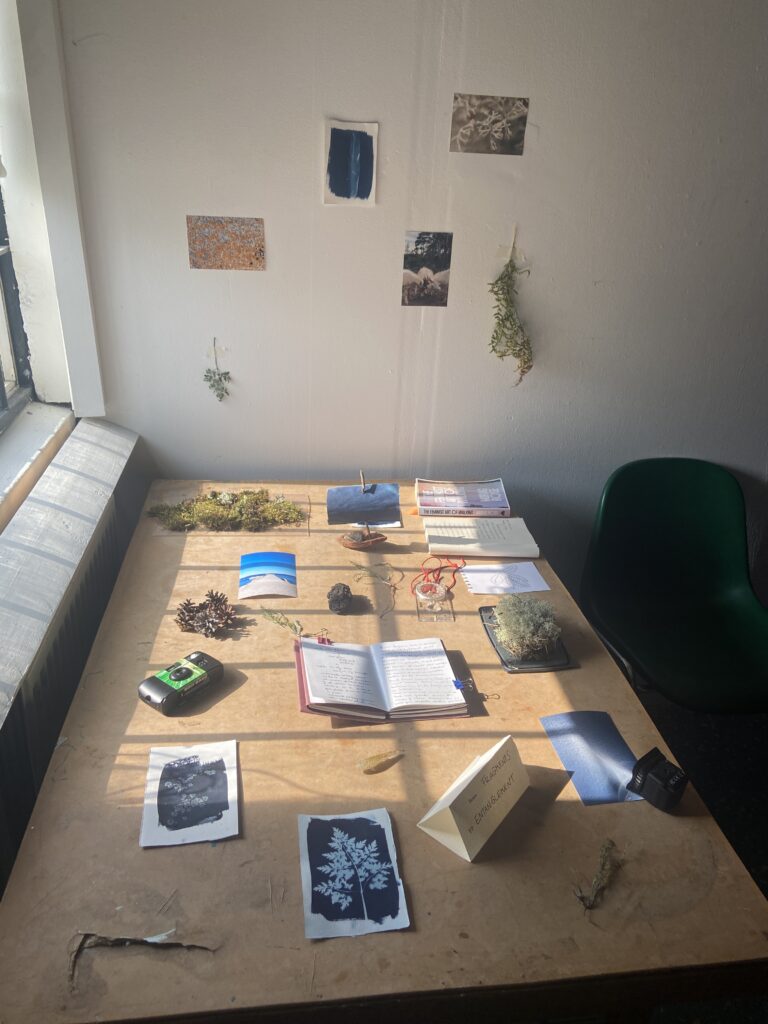
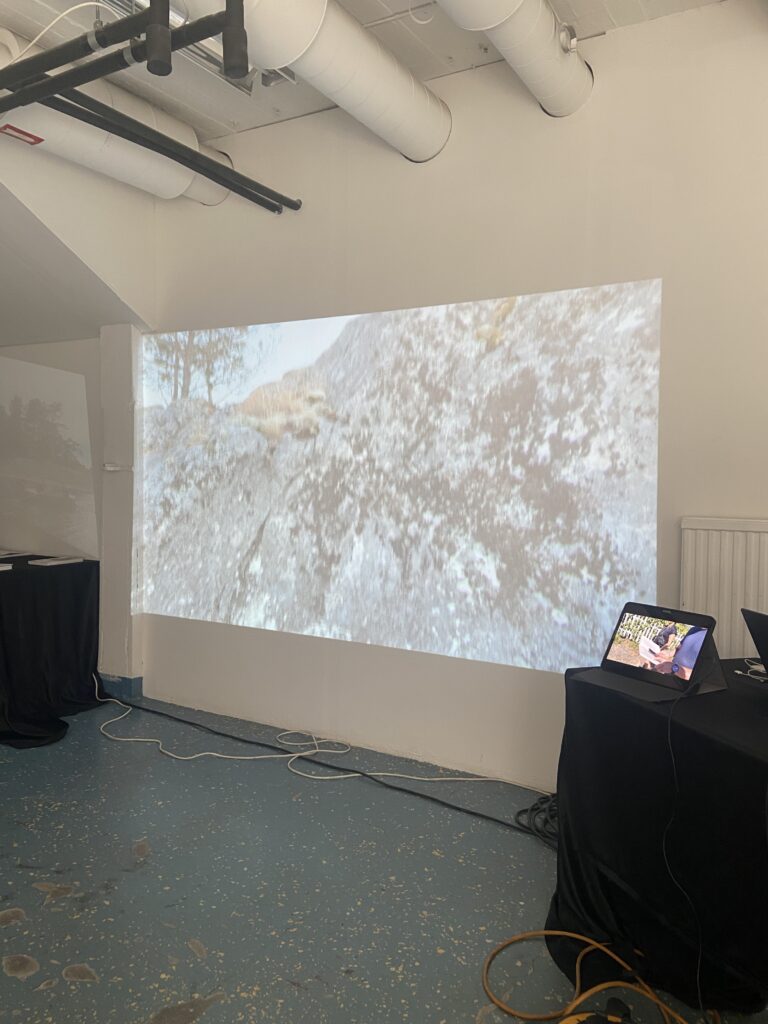
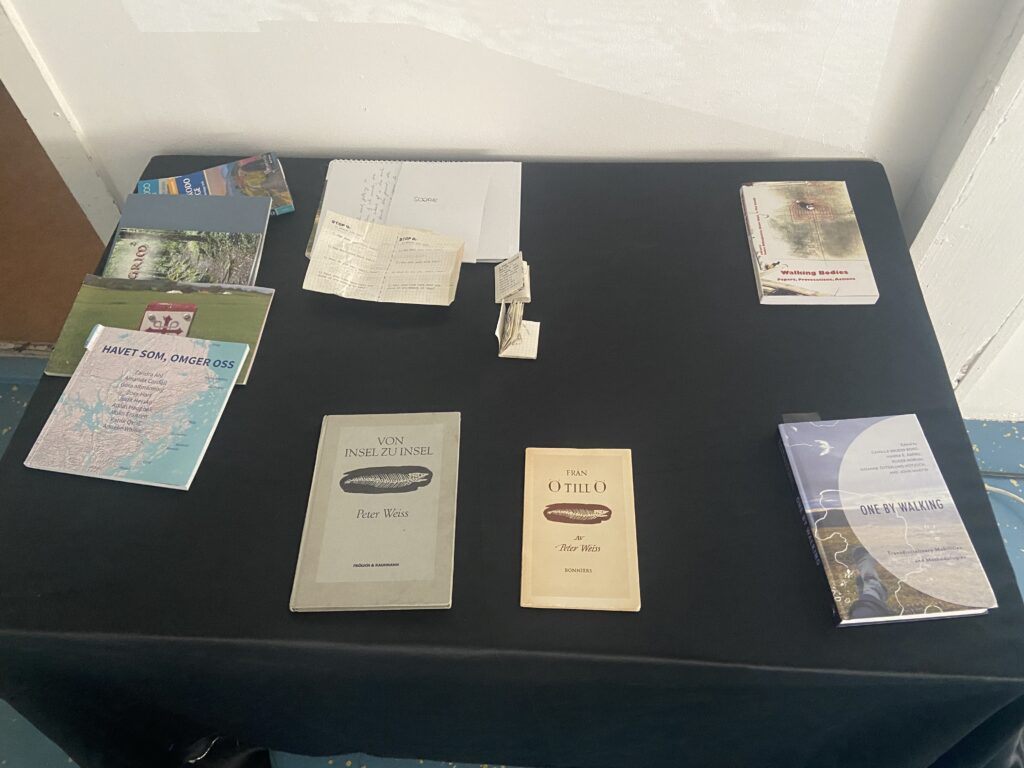
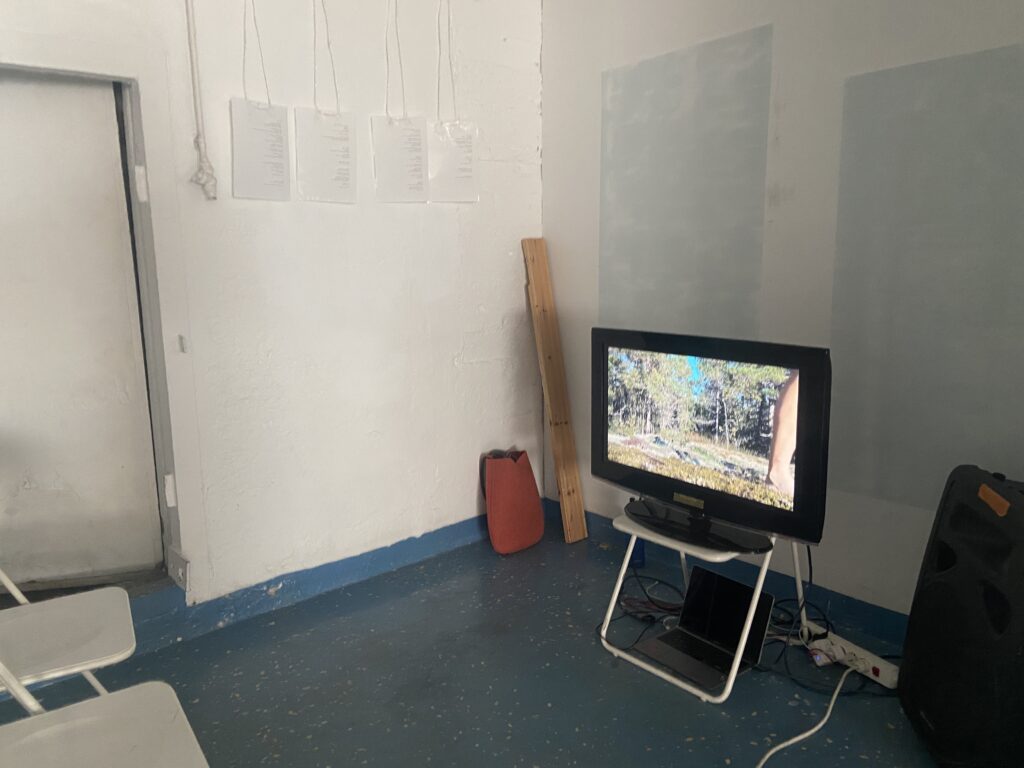
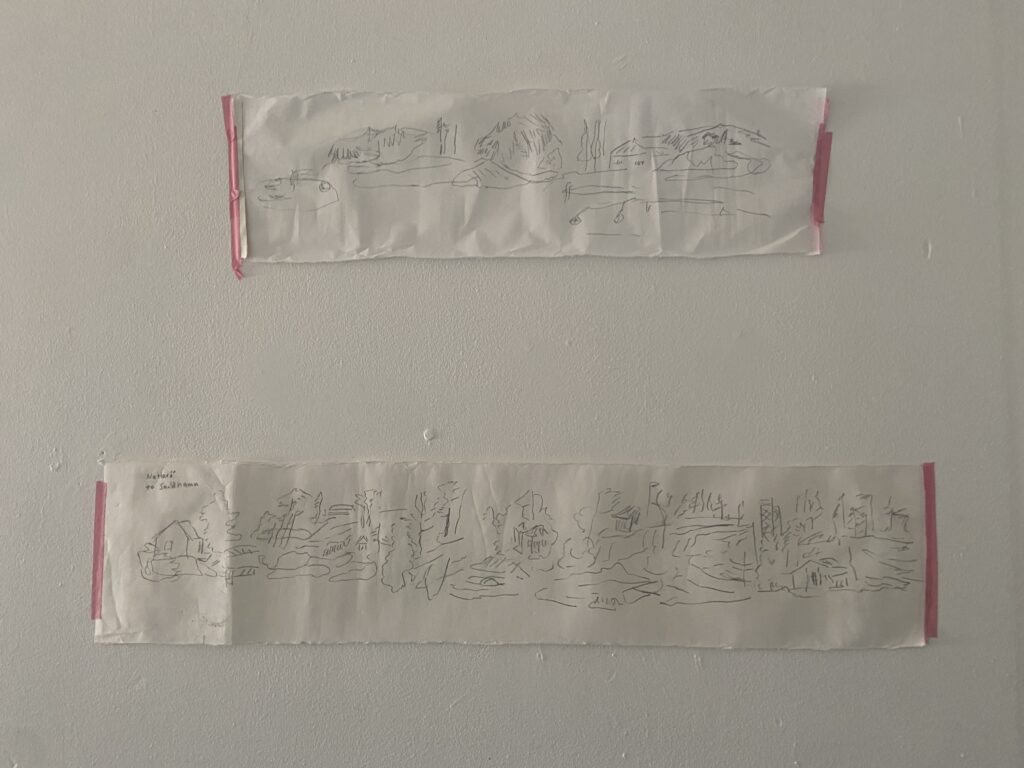
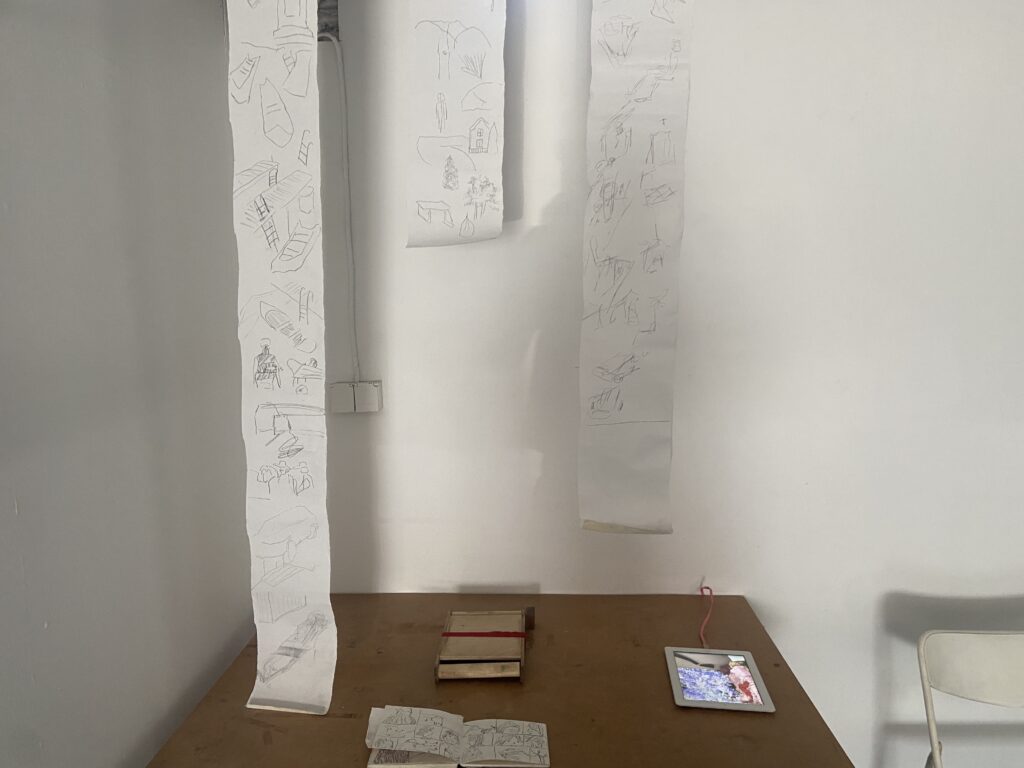
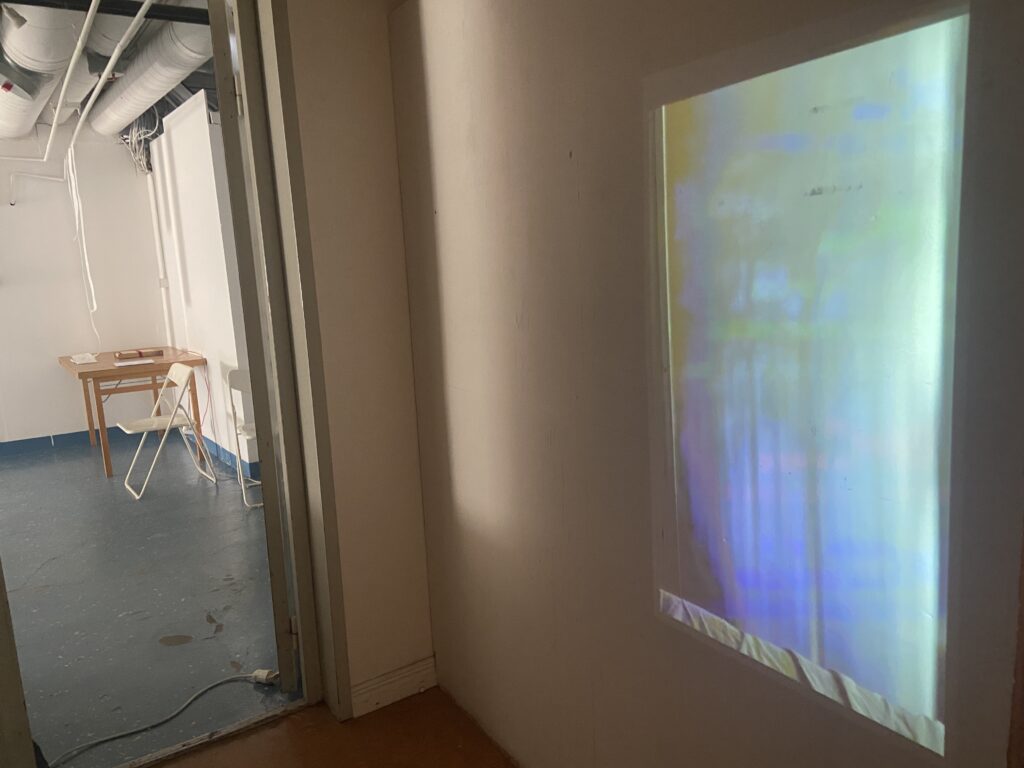
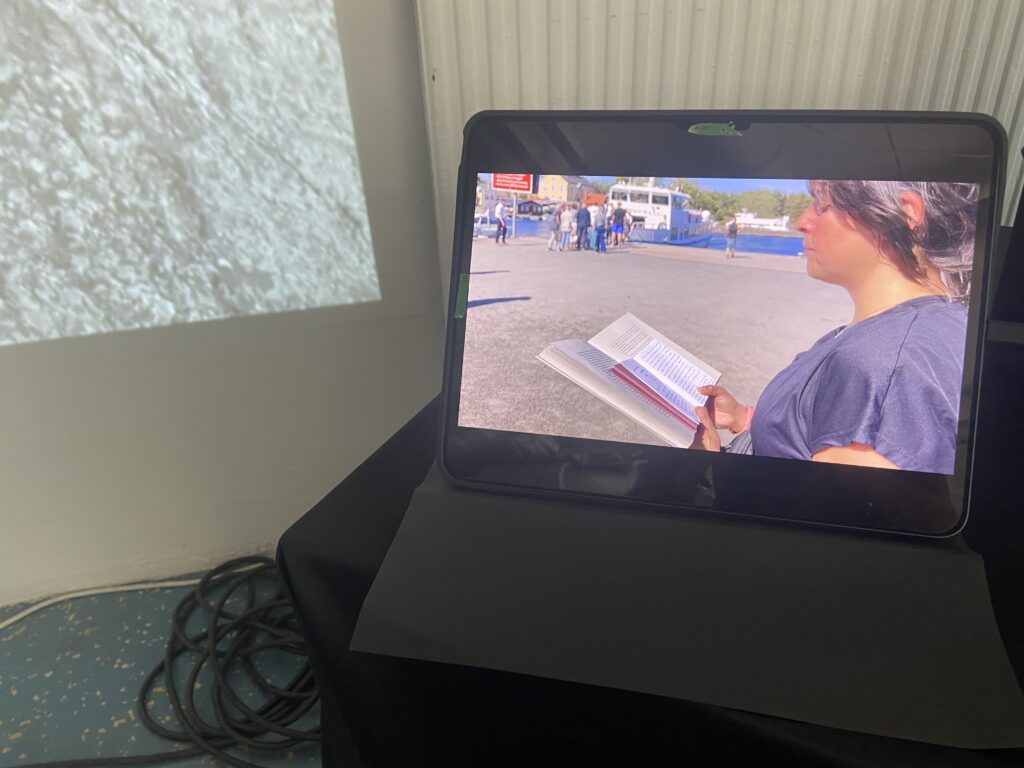
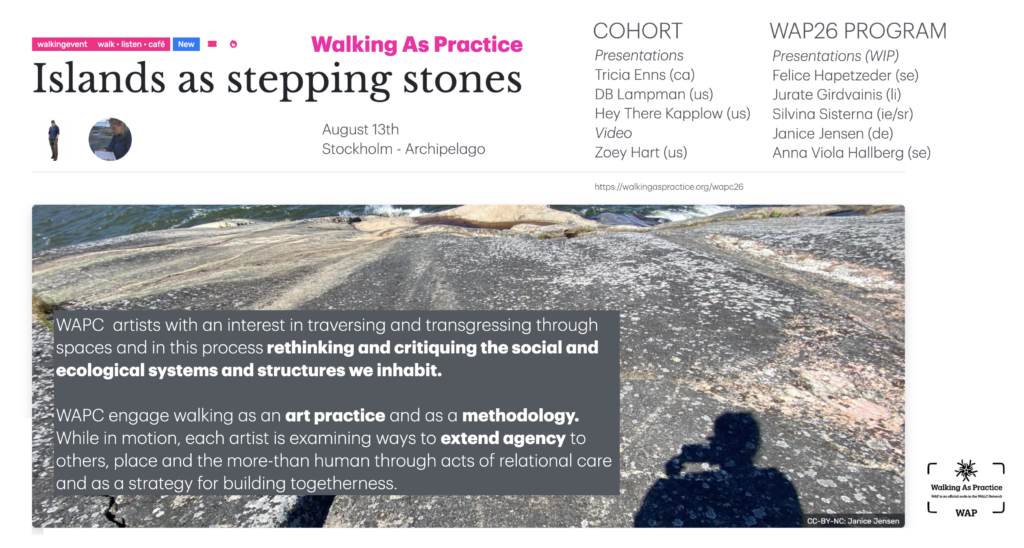
Aug 13 dissemination/public sharing in the project space at Slakthusateljéerna, Stockholm. Participants shared reflections, experiences and raw material
.
Public intervention, Reading walk, Text exertpt “From Island to Island” Peter Weiss, Sandhamn Aug 9, 2026
Text/audio installation (audio device in brick tube) , Slaktihusateljéerna, Jūratė Girdvainis
Zoey Heart, New York (part of presentation in proyectspace, work from WAP25)
WALC NODE CAFE (Walk – Listen – Create)
6-8 pm AUG 13, Documentation, Video link >>>
Walks island by island (additional documentation to be added)
Landsort
Labyrinth walk, Aug 6
East island walk, Aug 7
Drawing Machine , Public intervention walk Aug 7, 15:30
Lighthouse walk 17
Nåttarö
Bonnies Walk, Aug 8
Vänviken/Friend bay Walk, Night walk with share session and campfire cookout, Aug 8
Sandhamn
From Island to Island – Walk, 14:30-15:30, Public intervention walk, Aug 9
When I came in from outside, I just entered the room, myself. (My room—it is always myself. It doesn’t matter to me where this room is, in which city, in which country, in which part of the world. The world exists everywhere out there, the room everywhere in here. The world realizes itself everywhere in the same way. Along the same path through the same sieve.)
I think of my rooms, the long succession of rooms.
My first rooms in the corners of larger rooms, beneath tables and chairs. Rooms I had to share with others, who never let me come into myself. A room of branches beneath a shady pine. An airy room of a few boards high in the crown of an oak. A room carved out of the earth, cold, damp, but it gave me self-realization, was full of treasures. Peaceful rooms in quiet, friendly houses; rooms in the midst of hostile terrain, full of scandal, where I came only in secret, slipping away in the darkness.
Some rooms I had for only a few hours. I remember one: it was at the very top of a tower, perhaps a castle tower, the setting sun gilded everything, the windows stood open, birds were singing outside. I was alone with her. We thought this moment would last forever, but the demolition of the house had begun long ago; the walls were collapsing, perhaps there was no roof left at all, and soon strange, rough, dusty faces would look in at us.
And dark, disharmonious rooms in shattered times, rooms whose mirrors were unable to capture my image, rooms that made me lose my contours, that filled me with anguish.
A room that I see again after a journey; it stares at me with dead eyes. I have changed and become a stranger to it.
And this desolation in a room that a loved one has left. This emptiness after a broken communion. Everything stands cold and shivering, the walls seem about to collapse upon me.
Nighttime rooms with lamps that helplessly glow like torches on a black sea.
Rooms that let me drown.
And now: my room in the evening on the quiet island beneath a murky sky.
The landscape outside stands motionless. Somewhere far away, a shot rings out. The echo moves through the forest and across the water. Perhaps a bird has just died.
Soon it will be autumn.
Once again the man with the yoke passes by my window.
Singing, he goes into the forest to fetch new burdens.
Finnhamn/Ingemarsö
Walk to tent site Aug 9
Walk to Ingemarsö, Public Rowing boat Trail, Aug 10
Return to Stockholm with lunch ferry, Aug 11
Sample route recording, Finnhamn – Ingermarsö, including public rowing trail.
Info kit about islands route etc
PUBLIC PROGRAM 2026 ENTANGLEMENT & PROXIMITY
Link to be posted with daily journaling from our walks
During five days we cover a stretch of 74 kilometers (Landsort-Finnhamn) as we move through the south and mid Stockholm Archipelago, Sweden. We approach various local communities and focus on social imagination: walking as a way of thinking with the landscape, history, migration, memory and more-than-human worlds.
PUBLIC PROGRAM
In person
Join us for walks on Öja/Landsort, Sandhamn and Ingemarsö/Finnhamn.
Details in Link. >>>
Come meet us at Slakthusateljéerna in Stockholm.
We share work in progress and our experience form our island walks
Aug 13 between 2pm – 8 pm. >>>
On-line – Presentations
WAP26/WALC hosts Walk Listen Café (get free ticket) >>>
walk · listen · create hosts walk · listen · café, a bi-monthly (once every two months) online meeting for creatives in the fields of walking, writing and sound art. You need to sign up to get participation link for 6 pm on August 13.
Weather: Landsort – Nåttarö – Sandhamn – Finnhamn – Ingmarsö
WAP on IG https://www.instagram.com/walkingaspracticecohort/
PUBLIC PROGRAM 2026 ENTANGLEMENT & PROXIMITY
Link to be posted with daily journaling from our walks
During five days we cover a stretch of 74 kilometers (Landsort-Finnhamn) as we move through the south and mid Stockholm Archipelago, Sweden. We approach various local communities and focus on social imagination: walking as a way of thinking with the landscape, history, migration, memory and more-than-human worlds.
PUBLIC PROGRAM
In person
Join us for walks on Öja/Landsort, Sandhamn and Ingemarsö/Finnhamn.
Details in Link. >>>
Come meet us at Slakthusateljéerna in Stockholm.
We share work in progress and our experience form our island walks
Aug 13 between 2pm – 8 pm. >>>
On-line – Presentations
WAP26/WALC hosts Walk Listen Café (get free ticket) >>>
walk · listen · create hosts walk · listen · café, a bi-monthly (once every two months) online meeting for creatives in the fields of walking, writing and sound art. You need to sign up to get participation link for 6 pm on August 13.
Weather: Landsort – Nåttarö – Sandhamn – Finnhamn – Ingmarsö
WAP on IG https://www.instagram.com/walkingaspracticecohort/

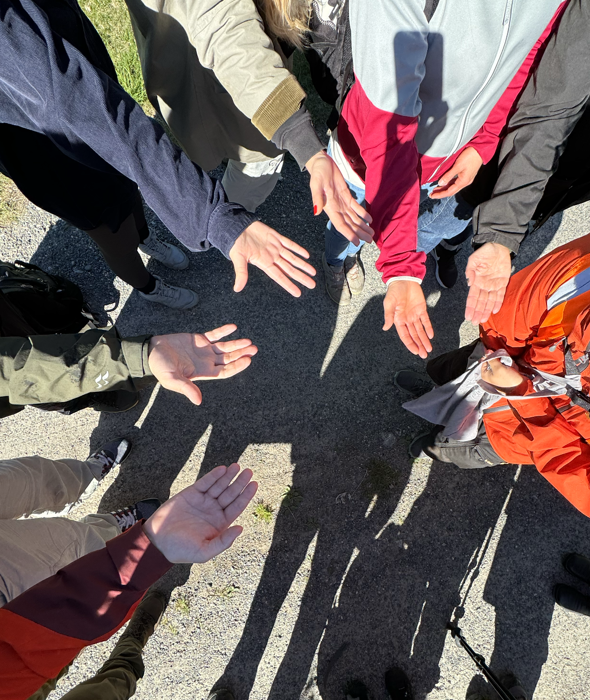
6 artists started out 5 completed the walk
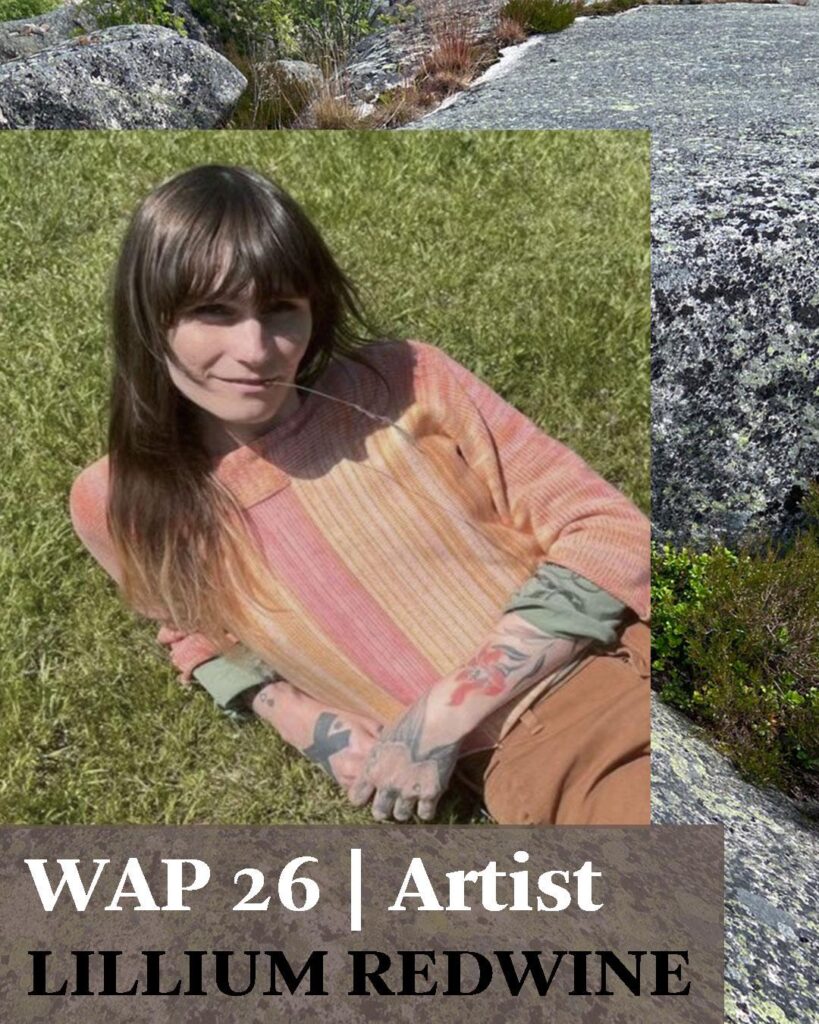
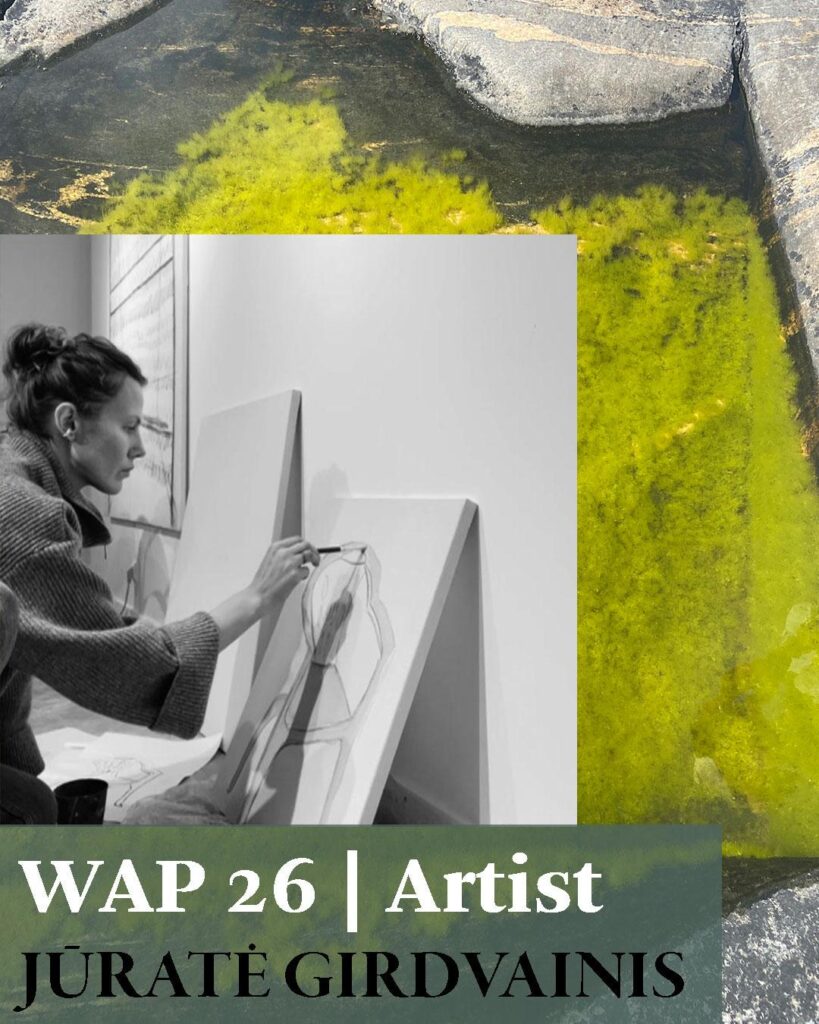

WAP 26 ARTISTS
August 6-11 we walk Landsort, Nåttarö, Sandhamn, Finnhamn, Ingmarö. Aug 5, 12, 13 the city of Stockholm and its islands are the walking grounds. Join public walks see separate section >>>
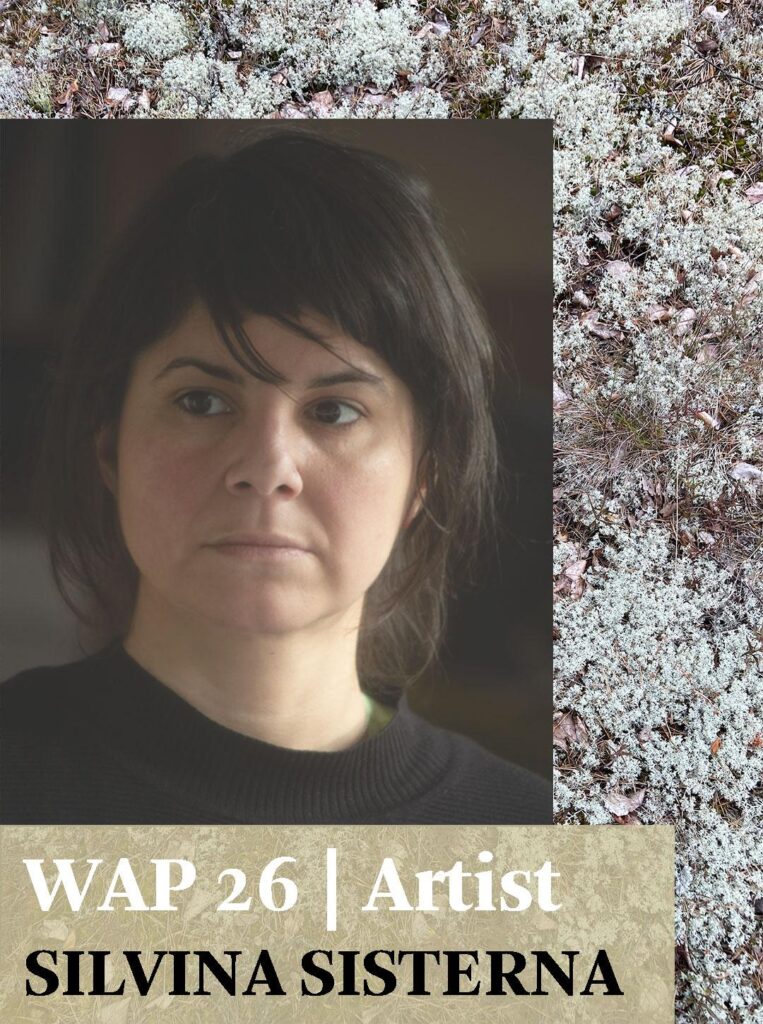
Silvina Sisterna
WAP26, Participant
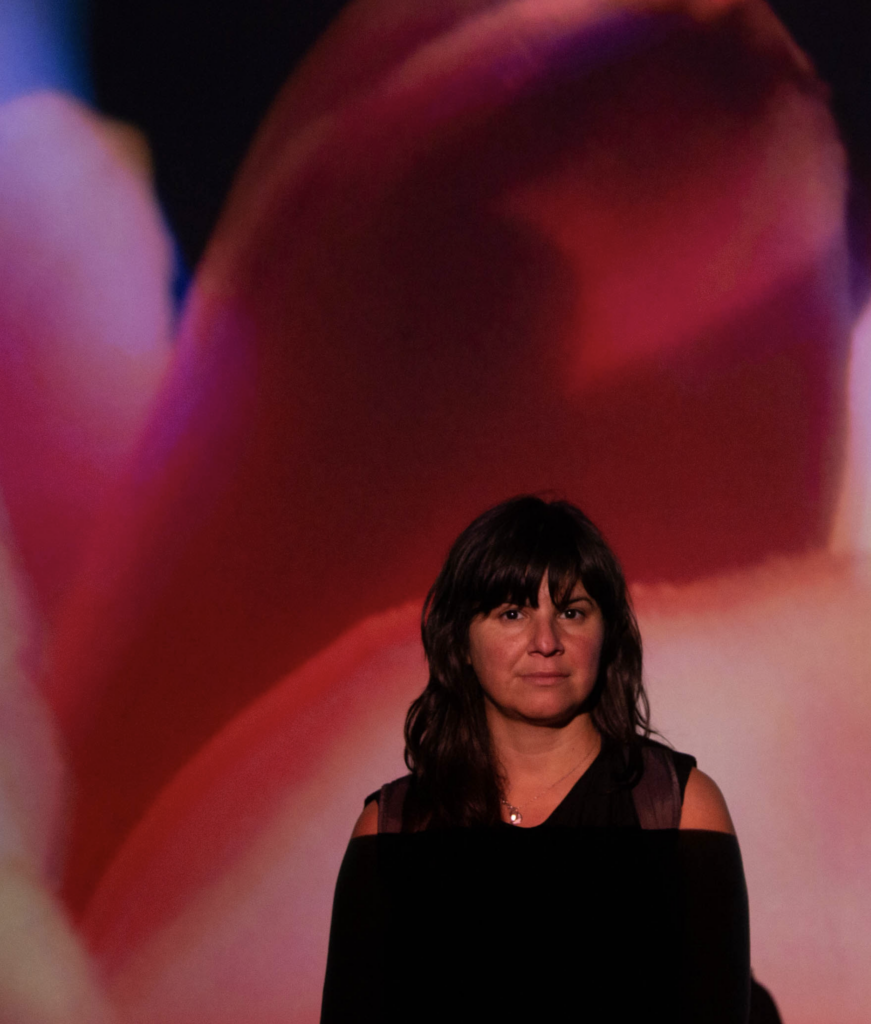
Silvina Sisterna socially engaged practice explores migration, belonging and place through walking as an artistic methodology. Working across photography, experimental analogue processes, cyanotype, drawing and participatory practices, she investigates how embodied movement can generate collective reflection and new relationships between people, landscapes and memory. She holds an MA in Fine Art from TU Dublin and has received support from the Arts Council of Ireland and Create through awards and residencies. She is currently developing Pies Para Qué (Mis Pies, Mi Casa), a collaborative walking project exploring migration, care and place through collective artistic practice.
“I am interested in exploring how walking can create encounters between human and more-than-human landscapes, and how our movements are shaped by histories, borders, migration routes and invisible relationships with place. During WAP26, I would like to share my experience of developing collective walking practices and explore how methodologies from my own practice (including cyanotype, photograms, writing and attentive observation) can respond to the landscape of the Stockholm Archipelago. I am particularly interested in exploring ideas of rupture, uncertainty and belonging through the relationship between water, territory and movement, while learning from other artists’ approaches to walking as an artistic and political practice.” SS
Silvina Sisterna is an Argentine visual artist based in Dublin, Ireland.
Website/social media
https://sisternasilvina.myportfolio.com/about
https://www.instagram.com/silvinasis/
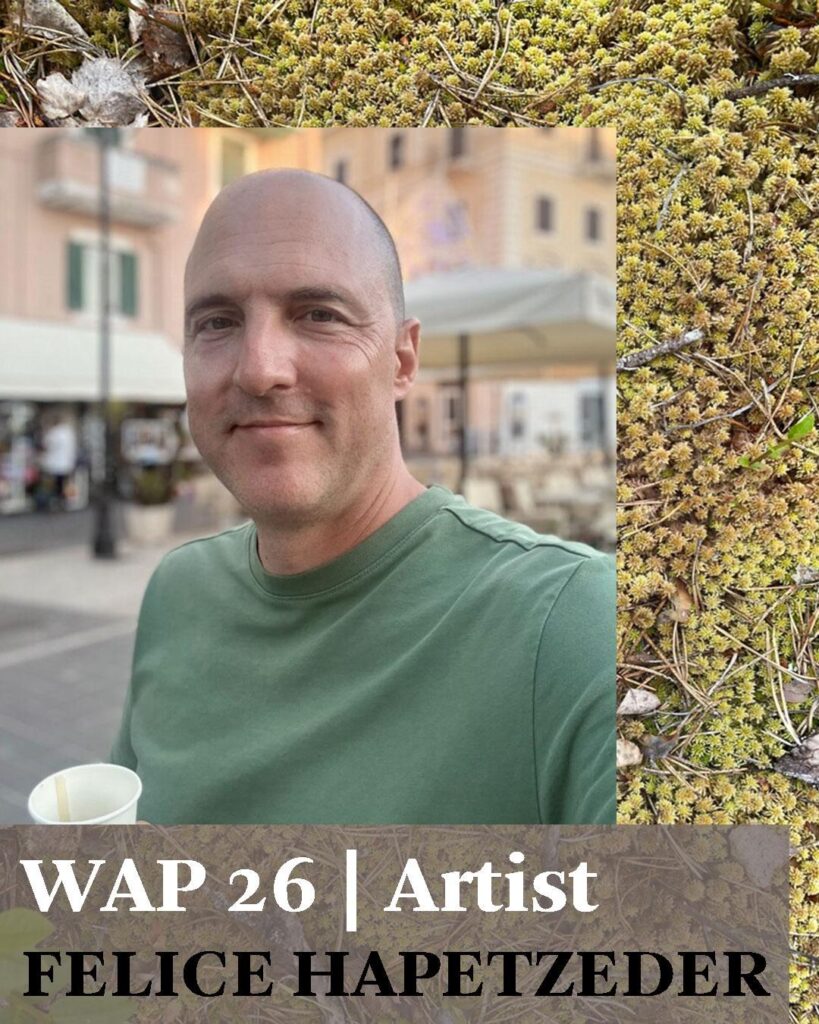
Felice Hapetzeder
WAP26, Participant
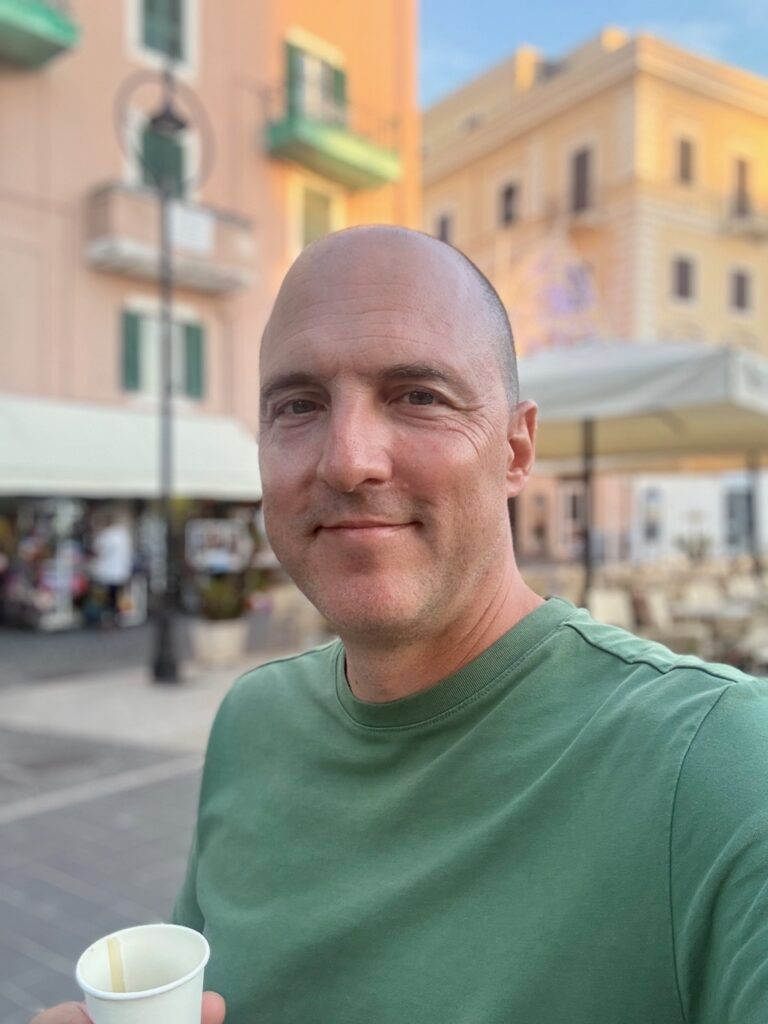
Felice Hapetzeder’s artistic practice engages the city as both lived environment and continuously rewritten document. Working across video, in- stallation, watercolour, text, and performance, he examines how urban transformation shapes what becomes visible, remembered, or suppressed, with a focus on collective memory, spatial structures, and systems of inclusion and exclusion. His work is often developed in relation to specific urban contexts in different cities, and addresses questions of segregation, cultural heritage, and urban identity. Hapetzeder has exhibited internationally in venues such as Pasaj gallery (Istanbul), Uppsala Art Museum, and White Box (Jakobstad), and his moving image works have been shown at festivals including Oberhausen International Short Film Festival and Videoformes as well as interna- tional platforms such as Haus der Kulturen der Welt (Berlin) and Somerset House (London). He holds an MFA from Konstfack and is Senior Lecturer and Head of Curriculum in Fine Arts at Novia University of Applied Sciences.
“The curatorial framework of WAP26 resonates strongly with my ongoing concerns. Its focus on proximity, entanglement and situated forms of knowledge closely aligns with my interest in how places are shaped through overlapping histories, movements and relationships. While my artistic research has primarily developed within urban environments, I see the Stockholm Archipelago as another context in which these questions can be explored through walking. Rather than approaching the archipelago primarily as a natural environment, I am interested in it as a geography of crossings, separations, labour, movement and memory – a place where relationships are continually negotiated and where histories remain embedded within the material world.” FH
Hapetzeder is based in Stockholm, Sweden.
Website/social media
https://www.hapetzeder.com
https://www.instagram.com/hapetzeder
https://tullkomplexet.konstforeningar.se
Jūratė Girdvainis
WAP26 Selection committee, participant
WAP26, Participant
Jūratė Girdvainis is a painter who earned her Master’s degree in painting from the Vilnius Academy of Arts in 2020. During 2019-2020, she took part in the Erasmus exchange program at the Funen Art Academy. A central aspect of Girdvainis’s practice is the repetition and reinterpretation of the same image. By revisiting familiar forms, she reveals new meanings and invites viewers to slow down and engage with the present moment. Simplified compositions and minimal backgrounds create quiet, contemplative spaces that encourage observation rather than analysis. Her paintings reflect on the pace and complexity of contemporary life, shaped by consumerism, social media, and constant visual stimulation. Rather than mirroring this intensity, Girdvainis offers moments of stillness and calm, creating space for reflection and presence. Her works are on everyday objects, repetition, memory. In 2025 she turned to work with text and recordings as part of her walking practice.
Girdvainis is based out of Vilnius, Lithuania.
Website/social media
https://www.instagram.com/jurate_girdvainis/
https://www.researchcatalogue.net/view/3759314/3759545
“I walk and the stars fall, I think about time…” Listen >>>
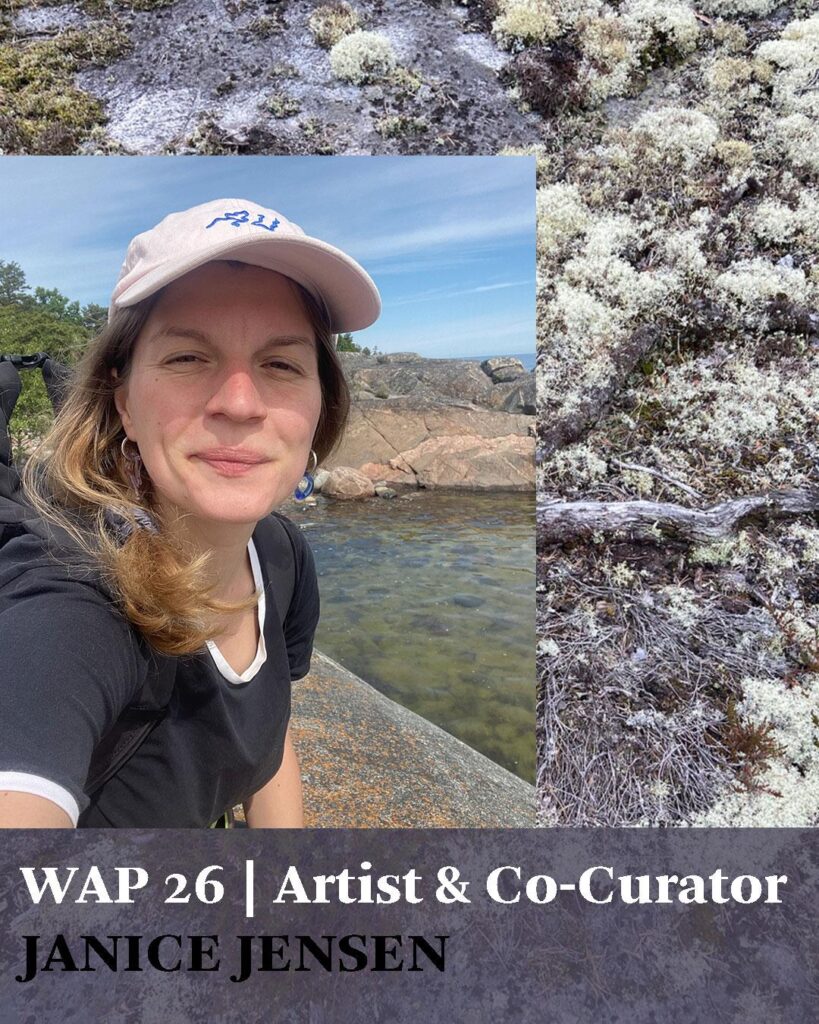
Janice Jensen
WAP26, Co-curator, participant and selection committee
WAP23, 24, 25, Participant
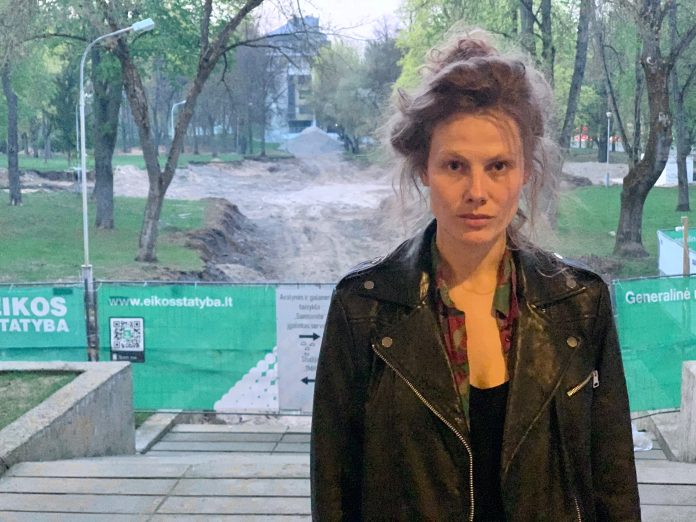
Walkingwhiledrawing is an ongoing project that began in 2020 during my Erasmus semester at the Vilnius Academy of Arts and at the Nida Art Colony in Lithuania. The project explores how we perceive and remember places while moving through them. Using drawing as my primary artistic tool, I designed a drawing machine that allows me to draw while walking, turning the act into both a performative gesture and a way of translating movement into image.
The resulting drawings have since evolved into paintings, animations, large-scale works, and VR paintings. Reconstructing these 2D drawings in virtual 3D space creates impossible spatial forms that can only be fully understood from the original viewpoint, highlighting the relationship between movement, memory, and perception.
Jensen is based out of Bielefeld, Germany
Presented April 25 at WALC (Walking Arts and Local Communities) course was Session 6 of the program, focusing on Walking Arts and Community-Based Practices.
Website/Social media
www.janice-jensen.de
https://www.instagram.com/janicejensen_/
walkingwhiledrawing * Parnidis Dune >>>
talking walking >>>

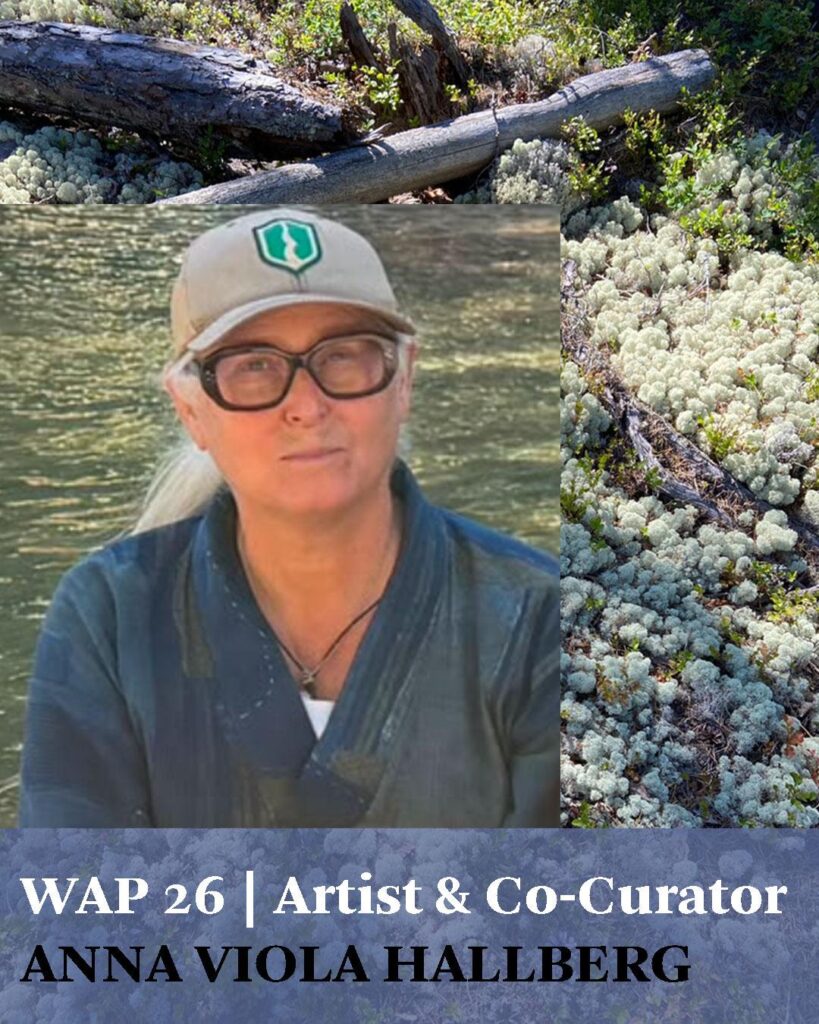
Anna Viola Hallberg
WAP26, Co-curator, participant and selection committee
WAP23, 24, 25, Participant, Curator
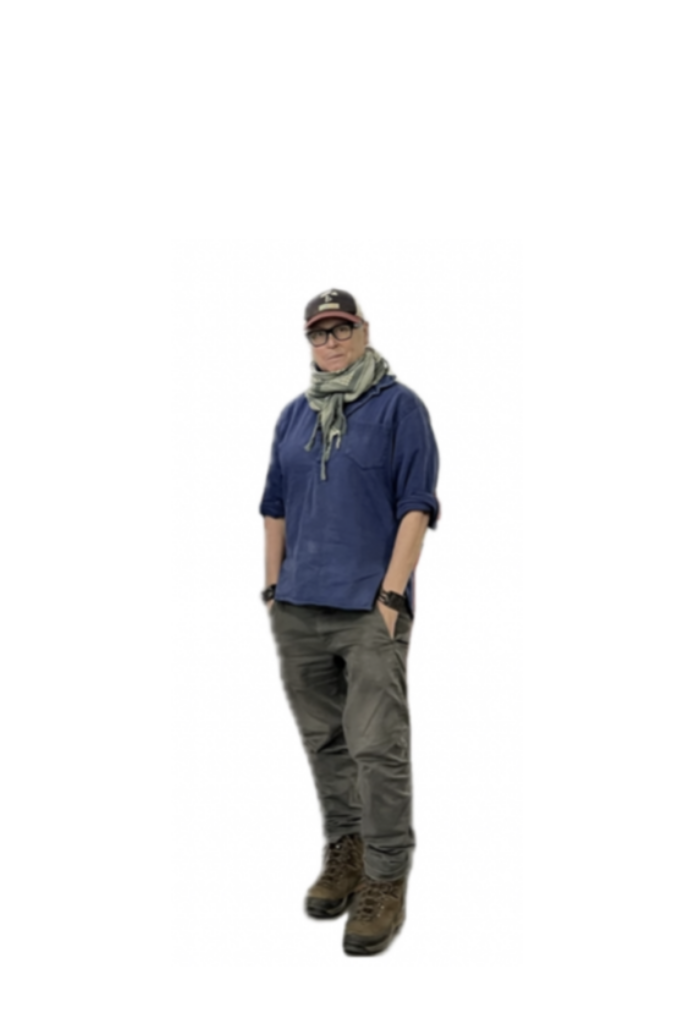
Walking is an integral part of Hallbergs practice as an artist and curator visualizing or enacting possible futures relating to artistic research on care, proximity, and responsibility. Hallberg prefers walks leading up to or along water. Liminal and attentive walking before distance. Walking becomes the means of understanding, interpreting and co-becoming.
In 2020 Hallberg started walking as part of the introduction for artist arriving to the art node BKN whee she was curator 2020-25. This as it nurtures friendship, care and responsibility. Hallberg has been curator of the WAP program since 2023 and in instigator of WAPC 2025.
Anna Viola Hallberg is based out of Stockholm and Mariestad, Sweden
Presented April 25 at WALC (Walking Arts and Local Communities) course was Session 6 of the program, focusing on Walking Arts and Community-Based Practices.
Website/social media
annaviolahallberg.com
https://www.instagram.com/a_n_n_a__v_i_o_l_a/
Walking projects >>>
APPLICATION INFORMATION
SUBJECT LINE: WAP26 application
(If you don’t do this we might miss your application)
BODY TEXT
Please write your name where you depart from and if you have any specific concerns. Please also copy bio and website/social media link directly into body text
PDF ATTACHMENT, please make pages into 1 document
PAGE 1
1) Short bio, website/social media link
2) How your practice connect your WAP26 and what you would like to explore, share or work on.
PAGE 2-3
About your practice with ref images, video/audio link etc.
SELECTION COMMITTEE: Curators and WAPC member
You have option of tent or indoor accommodation of your choice. For itinerary see info Kit at bottom of the page (subject to slight changes).
– CLOSED –Special selection for Walking Artists (WAN & WALC members), OPEN until July 24th.
– CLOSED – General selection closes on July 14th (open call), selection CLOSED
We need to keep the group small to accommodate ferries, campgrounds etc.
Please Note: July 27th info session where we will provide a general packing list, tentative route, safety issues etc. Invitation to info meeting is sent out to selected artists. Participation is mandatory if you cant make it you need to let us know. Invitation sent to selected artists.


Below WAP26 info kit/Itinerary, the focus is on schedule, safety, accommodation and introduction to each island in the archipelago. For curatorial framework, general links about archipelago see section “WAP26 – Entanglement and Proximity” as well as introduction on top of the page.


WAP/WAPC creates conditions while walking for collective learning, co-creation, and experimentation. It views walking art as a space where democratic relationships can be practiced, where communities can come together around complex issues, and where artistic creation can contribute to more equitable, caring, and sustainable ways of living and working together.
WALC Walking Arts and Local Communities website is walctogether.eu.
WALC – Walc Listen Cafe, Schedule >>>
WAPC A COHORT/COLLECTIVE/COALITION of artists working together
expanding on walking as artistic practice and methodology >>>
wapc @ walkingaspractice.org